New Perspectives
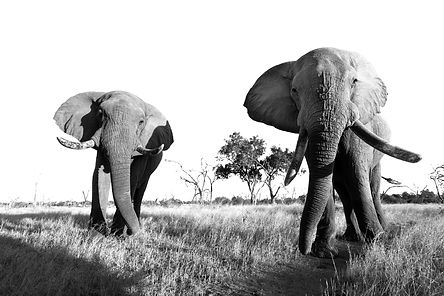
Wildlife photography often demands patience and creativity, but sometimes it also requires stepping beyond traditional perspectives. On this trip, I experimented with new ways of bringing the camera closer to wildlife — using a remote-controlled camera car and a monopod to capture moments from angles rarely seen.
New Perspectives
Photography is art, and like all art it thrives on creativity — on daring to see the world from a new perspective. Sometimes that means finding a different angle, and sometimes it means placing yourself, and your equipment, in situations where risk and reward walk side by side.
This trip was meant to be an experiment in perspective. It was my opportunity to test Carapace, a custom-built remote-controlled camera car designed to bring the lens closer to wildlife than ever before. Alongside that, I wanted to refine another technique: using a monopod to position the camera in tight or unusual spaces where it could reach scenes I could never capture by hand.
Both approaches open the door to extraordinary images — but they also come with a certain tension. Expensive equipment placed nose-to-nose with wild animals rarely comes out unscathed.
Carapace
The night had been long. We had been tracking five lionesses through the darkness for what felt like hours, following faint movements and listening for distant calls across the bush.
Eventually we found our opportunity.
Their direction became clear, and we quickly drove ahead to position ourselves a few hundred metres in front of them, hoping to intercept the pride as they moved along the road.
I checked the distance again and my heart sank. They were closer than we thought — already approaching fast.
Adrenaline kicked in as we rushed to finish the setup. Carapace was placed carefully on the ground, its small wheels humming softly in the still night air as we positioned the camera.
Then one of the lionesses did something unexpected.
Breaking slightly away from the group, she walked directly toward the little machine. We quickly turned the camera to face her, finger poised over the shutter.
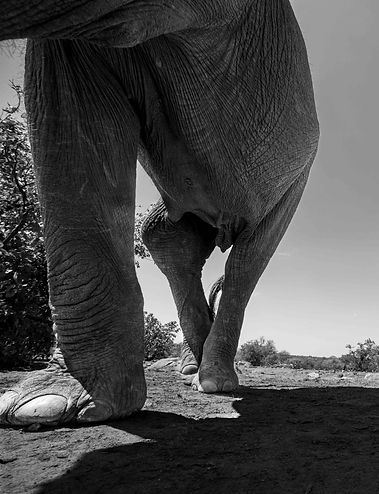
Seconds later she stepped right over Carapace.
I pressed the shutter at that exact moment, capturing a perspective that felt almost unreal — the view from beneath a lioness in motion. A fleeting instant of tension, danger, and beauty frozen in a single frame.
Monopod
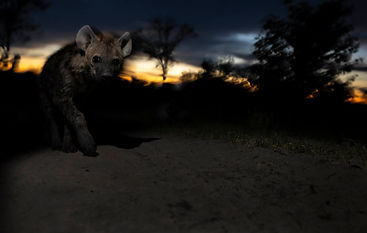
Not long afterwards we came across a hyena den alive with movement and curiosity.
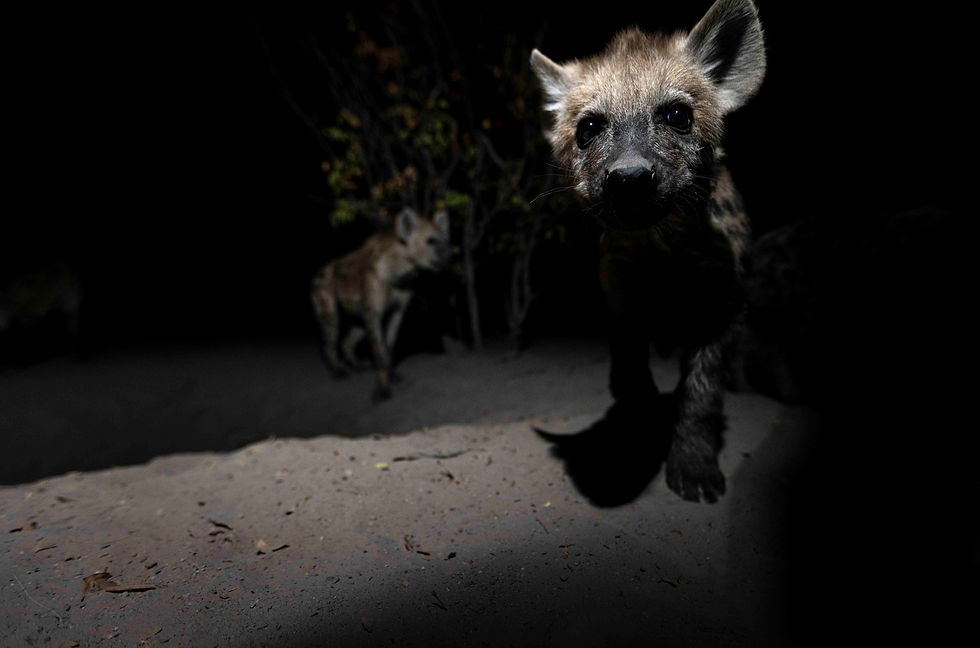
Young hyenas bounced around the entrance, playful and energetic as they darted between the shadows of the burrow and the open ground outside. It was the perfect opportunity to try something different.
With the camera mounted on the monopod and extended low to the ground.
The reaction was immediate.
The youngsters approached cautiously, circling the lens and sniffing at this strange new object in their territory. Their expressions shifted between suspicion and curiosity as they inspected the camera.
Through the lens I captured something special — raw, unfiltered moments of young predators discovering the world around them.
In moments like these, photography becomes more than simply documenting wildlife. It becomes a dialogue between human creativity and the untamed world.
Tools like the Carapace and the monopod are more than just equipment. They are invitations into perspectives we would otherwise never see.
And sometimes, when everything aligns, those perspectives reveal a frame capable of telling a story that words never could.